
Why the species matters
A roof rat and a Norway rat can both be called "a rat in the house," but they live in opposite ends of it. One climbs and nests high in the attic. The other burrows and stays low, in crawl spaces and along foundations. A house mouse can live its whole life inside one kitchen wall, while a white-footed mouse is more likely to be in the shed or a closed-up cabin. Squirrels come and go by day and nest in soffits.
Because each animal uses a home differently, the trapping spots, the entry points to seal and even the health precautions change. Telling them apart doesn't have to be hard. Droppings, the height of the damage, the time of day you hear noise, and where you find nesting will usually point to the answer. Once the species is clear, our six-step rodent control process shows what happens next.
Roof rat (Rattus rattus)
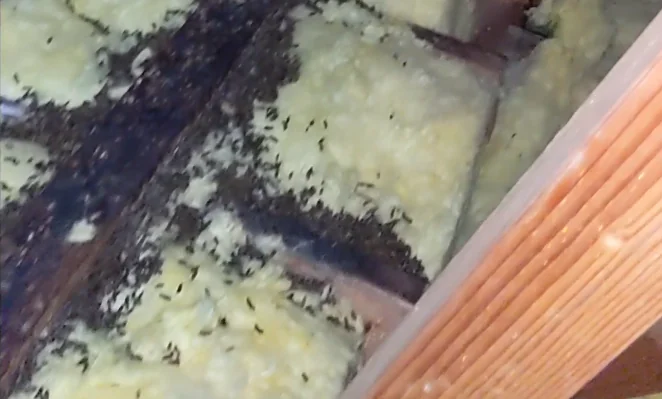
The roof rat, also called the black rat, is the climber. Texas Tech University's Mammals of Texas describes it as common over most of the state, especially in towns, and notes that in the southern United States it is far more common than the Norway rat. It tends to live in attics, rafters and crossbeams, and it travels along pipes, wires, beams and ceiling joists.
- Look
- Slender, with soft brown to blackish fur, large ears and a pointed nose
- Size
- Head and body about 6–8 inches, with a tail about as long or longer
- Droppings
- About ½ inch long, with pointed ends
- Found in
- Attics, wall tops, soffits, trees, ivy and dense shrubs
- Active
- At night; noise often runs along the ceiling and down the walls
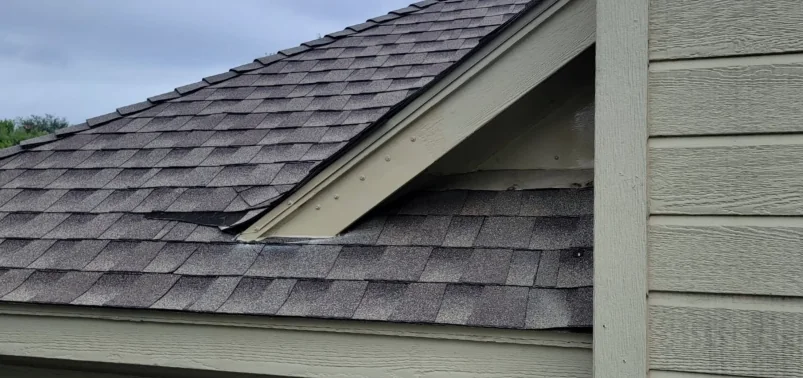
Roof rats love tall pines, pecan and oak trees, and vines that touch the roof, which describes a lot of Huntsville neighborhoods. They often reach the attic by running along branches or power lines and slipping into gaps where roof sections meet. Fruit trees, bird feeders and pet food on porches give them plenty to eat. Our rat removal page covers how they're trapped and sealed out.
Norway rat (Rattus norvegicus)
The Norway rat, sometimes called the brown rat or sewer rat, is the heavier digger. According to the Internet Center for Wildlife Damage Management, it's slightly larger than the roof rat, with adults averaging 12 to 16 ounces, and its tail doesn't reach the tip of its nose when laid forward along the body. It digs burrows along walls, buildings and fences, and under bushes and debris.
- Look
- Heavy-bodied, coarse brown or reddish-gray fur, small ears and a blunt nose
- Size
- Bigger and bulkier than a roof rat; the tail is shorter than the head and body
- Droppings
- Up to about ¾ inch long, capsule-shaped with blunt ends
- Found in
- Crawl spaces, under slabs, garages, woodpiles, sheds and along foundations
- Signs
- Burrow holes about 2–3 inches across near the foundation or under debris
In Huntsville, Norway rats show up most around pier-and-beam homes, barns, feed storage, chicken coops and places with standing water or drainage nearby. If the activity is under the floor rather than over your head, the crawl space is the first place to look.
House mouse (Mus musculus)
The house mouse is the classic indoor mouse. It's small, gray-brown and can live its whole life inside a home, nesting in walls, cabinets, behind appliances and in stored boxes. It needs very little water and gets much of what it needs from food, which is why it does so well in pantries and garages.
- Look
- Small and slim, dusty gray-brown above, slightly lighter below, with a nearly hairless tail
- Size
- Head and body roughly 2½–3½ inches, with a tail about as long
- Droppings
- About ⅛–¼ inch, rod-shaped with pointed ends, often scattered in large numbers
- Found in
- Kitchens, pantries, cabinet bases, behind the fridge and stove, garages and wall voids
- Smell
- A musty, stale odor in closed cabinets when numbers build up
Mice squeeze through openings that look far too small, so gaps around plumbing under sinks, the corners of garage doors and the space under exterior doors all count. Our mice exterminator page explains how a house mouse problem is cleared out.
Deer mice and white-footed mice (Peromyscus)
These are the native "wild" mice. They're a little bigger than a house mouse, with brown or reddish-brown backs, bright white bellies and feet, big dark eyes and large ears. The two species look so much alike that even biologists often rely on fine details to tell them apart. Mammals of Texas reports the white-footed mouse across most of the state, most abundant in east-central Texas bottomlands, denning in logs, brush piles, burrows and sometimes buildings.
- Look
- Two-toned: brown above, crisp white below, with white feet
- Size
- Similar to or slightly larger than a house mouse
- Droppings
- Similar in size to house mouse droppings
- Found in
- Sheds, barns, deer blinds, cabins, RVs, garages and homes near woods
- Health
- Linked by the CDC to hantaviruses that cause HPS
These mice are the reason careful cleanup matters in outbuildings. If you find two-toned mice or their nests in a shed, blind or lake cabin, read our hantavirus page before you start cleaning.
Hispid cotton rat and other native rodents
The hispid cotton rat (Sigmodon hispidus) lives in tall grass, old fields, pastures and road and railroad rights-of-way across Texas. Mammals of Texas describes it as a robust rat with coarse, grizzled brown fur, small ears and a tail shorter than its head and body, weighing about 80 to 150 grams. Its populations are known for big swings: several wet years and mild winters can produce very high numbers, followed by a crash.
Cotton rats mostly stay outdoors, but on rural lots they move into garages, sheds, feed rooms and the edges of homes, especially when nearby fields are mowed or cut. The CDC lists the cotton rat as a carrier of Black Creek Canal virus, one of the hantaviruses linked to HPS.
Two more natives are worth knowing about:
- Marsh rice rat (Oryzomys palustris): a rodent of wet, marshy ground, more likely near river bottoms and lake edges. The CDC links it to Bayou virus.
- Eastern woodrat (Neotoma floridana): sometimes called a pack rat. Mammals of Texas places it in the eastern third of the state, mostly in wooded and brushy land. It seldom contacts people but may build nests of grass, leaves and twigs in barns and outbuildings.
Tree squirrels
Squirrels are rodents too, and in a house full of tall trees they're often the animal in the attic. Unlike rats and mice, they're active during the day, so the noise usually starts around sunrise and again in the late afternoon.
- Eastern fox squirrel (Sciurus niger): large, with rusty-orange fur on the belly and tail. Found over much of Texas, including town neighborhoods.
- Eastern gray squirrel (Sciurus carolinensis): smaller and grayer, with a white belly. Mammals of Texas gives its native range as the eastern third of the state, and notes it breeds year-round with peaks in July to September and December to February.
- Southern flying squirrel (Glaucomys volans): small, soft and gray, active at night. Found in wooded parts of the eastern third of Texas, nesting in tree cavities and old woodpecker holes.
Squirrels chew soffits, fascia, roof vents and wiring, and they often raise young in attics, so timing and one-way doors matter. Our squirrel removal page covers how that's handled safely.
Side-by-side comparison
| Species | Droppings | Where in the home | When active |
|---|---|---|---|
| Roof rat | About ½ in, pointed ends | Attic, wall tops, soffits | Night |
| Norway rat | Up to ¾ in, blunt ends | Crawl space, garage, foundation | Night |
| House mouse | ⅛–¼ in, pointed | Kitchen, cabinets, walls | Mostly night |
| Deer / white-footed mouse | Similar to house mouse | Sheds, cabins, garages | Night |
| Cotton rat | Larger than mouse droppings | Garages, sheds, rural edges | Day and night |
| Tree squirrels | Larger, rounded pellets | Attic, soffits, eaves | Day (flying squirrels at night) |
Seasonal activity in East Texas
Rodents in Texas don't have a long winter break, but their pressure on homes still shifts through the year:
- Fall: Cooler nights, harvested fields and fewer outdoor food sources push mice and rats toward buildings. This is when many people first hear noise in the walls.
- Winter: Cold snaps and freezes send rodents deeper into attics, garages and crawl spaces. Gray squirrels have a breeding peak from December to February.
- Spring: Breeding picks up. Mammals of Texas notes roof rat breeding peaks in February–March and May–June. Squirrels with young are common in attics.
- Summer: Hot attics slow some activity, and roof rats show their lowest activity in July and August, but heavy rain and flooding can drive rodents up from low ground. Gray squirrels have a second breeding peak.
Diseases linked to rodents
Most people never get sick from rodents, but they do carry illnesses that health agencies take seriously. Here are the main ones relevant to Texas homes.
| Illness | Main rodent link | How people are exposed |
|---|---|---|
| Hantavirus pulmonary syndrome | Deer mice, white-footed mice, cotton rats, rice rats | Breathing dust from urine, droppings and nesting |
| Flea-borne (murine) typhus | Rats and other small mammals that carry infected fleas | Flea bites or flea dirt rubbed into the skin |
| Leptospirosis | Rodents and other animals that shed the bacteria in urine | Contaminated water or soil contacting cuts, eyes or mouth |
| Salmonellosis | Rats and mice that contaminate food | Eating food or touching surfaces soiled by droppings |
| Rat-bite fever | Rats and sometimes mice | Bites, scratches or handling rodents |
Flea-borne typhus is the one many Texans haven't heard of. DSHS explains that it's caused by the bacterium Rickettsia typhi and spread by infected fleas carried by rats, opossums, cats, dogs and other small mammals. Keeping rodents and opossums away from the house and keeping pets on flea control both help.
Leptospirosis, according to DSHS, is caused by Leptospira bacteria in contaminated water or soil. Flood water and puddles where rodents have been are the usual concern, which matters in low-lying parts of Walker County after heavy rain.
Hantavirus gets its own page because it's the illness people worry about most when they find droppings. Our hantavirus in Texas page covers symptoms and safe cleanup.
This is general information. If you feel sick after contact with rodents, their droppings or flood water, see a doctor and mention the exposure.
Damage rodents do to homes
- Wiring: Rodent teeth never stop growing, so they gnaw constantly. Chewed wiring in attics and walls is a real fire concern.
- Insulation: Tunnels, nests, droppings and urine flatten and soil insulation, which hurts its performance and leaves a lasting smell.
- Ducts: Rodents tear flexible ductwork, which wastes cooled air and can pull odors into living spaces.
- Wood and trim: Squirrels and rats chew fascia, soffits, roof returns and vent covers to widen entry points.
- Vehicles: Rats and mice nest in engine bays and chew wiring in cars, trucks, tractors and mowers.
- Food and stored items: Pantries, feed rooms, seed, boxes, clothing and paperwork can all be ruined.
Whatever the species, the fix starts with finding how it gets in. If you're still not sure what you've got, our Huntsville rodent control guide lists the signs to look for.
Not sure which rodent it is?
A local pro can identify it during the inspection.
Species and disease FAQ
What is the most common type of rat found in Texas?
Both roof rats and Norway rats are found across Texas. Texas Tech's Mammals of Texas describes the roof rat as common over most of the state, especially in towns, and far more common than the Norway rat in the southern US. In attics around Huntsville, the roof rat is usually the one.
How can I tell rat droppings from mouse droppings?
Size is the easiest clue. Mouse droppings are tiny, about the size of a grain of rice or smaller. Rat droppings are roughly ½ to ¾ inch long, closer to a raisin. Pointed ends suggest a roof rat or mouse; blunt, capsule-shaped ends suggest a Norway rat.
Are field mice dangerous?
Wild mice such as deer mice and white-footed mice are the ones the CDC links to the hantaviruses that cause HPS. Cases are rare in Texas, but it's a good reason to avoid sweeping their droppings and to wet down nests before cleaning sheds, blinds and cabins.
Is it a rat or a squirrel in my attic?
Timing tells you a lot. Squirrels are noisy at sunrise and in the late afternoon and quiet at night. Rats and mice are busiest after dark. Squirrel droppings are larger and rounder, and squirrel damage often shows as big chewed holes at the roofline.
Do rodents in Texas go away in summer?
No. Some activity slows in very hot attics, but rodents breed for much of the year in Texas. Summer storms and flooding can even push them into homes. If you had activity in spring, it's unlikely to fix itself by fall.
Can rodents carry fleas into the house?
Yes. Rats and other small mammals can carry fleas, and DSHS links infected fleas to flea-borne typhus in Texas. Removing rodents, sealing them out and keeping pets on flea prevention all reduce the chance of fleas moving indoors.
Sources
The Mammals of Texas
Range, habitat, size and breeding for Texas rodents.
Texas Tech UniversityNorway rats
Identification, droppings and burrow signs.
ICWDMFlea-borne typhus
Cause, animal hosts and prevention in Texas.
Texas DSHSLeptospirosis
How the bacteria spread through water and soil.
Texas DSHS